 $4.99
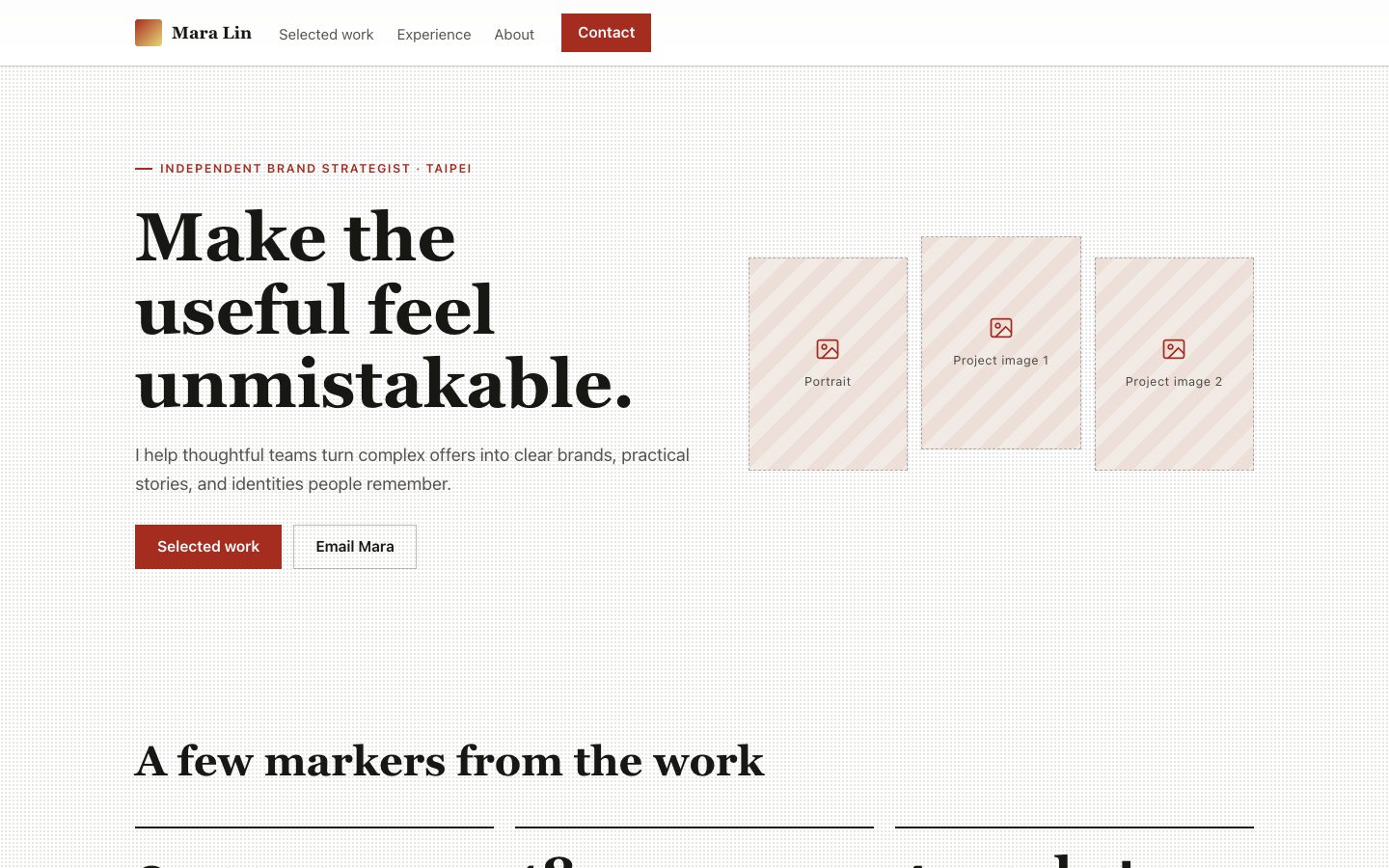
$4.99Paper-Texture Resume Site
A polished, responsive personal website with folded-paper details, highlighter-led headlines, and a clear editorial structure for sharing career experience and selected work.
Turn a creative professional's resume into a responsive portfolio site with a lanyard-style profile badge, paper-like project previews, cobalt highlights, and clear career history.
No external services. Runs entirely on your agent.
/sl-scrapbook-resume-site Create a responsive portfolio and resume for fictional Portland independent brand designer Tavi Mercer, for prospective clients. In order: navigation, stacked hero, three selected projects, about with three bullets, three quick stats, three capabilities, reverse-chronological experience, project inquiry CTA, footer. Quote “Tavi Mercer” and “Have a project in mind?” Keep the Cobalt Field Notes scrapbook style.
Verified
| render-check | pass | 4.0 / 5 | 25s |
Yes. Names, dates, project descriptions, links, and contact details are standard page content rather than text embedded in images.
The page uses clearly labeled typographic project previews. Real images can replace them later without changing the content structure.
The self-contained HTML can be published on any host that serves static files. Hosting and a domain are not included.
A scrapbook-style resume site that gives a creative career the clarity of a CV and the character of a portfolio.
Style: Cobalt Field Notes. A carefully assembled creative dossier, tactile and expressive without obscuring professional credentials. Follow references/style-guide.md exactly.
If something essential is missing, ask one short question before starting. Never invent facts, numbers, quotes or customer names; mark gaps as [needs source].
references/section-library.md. List the sections the page needs, in order, before writing any markup.references/template.html to index.html. Delete the sections the brief does not need; reorder the rest.references/style-guide.md in the :root block. Do not introduce colors, fonts or radii outside the tokens.REPLACE_ placeholder, inside the word limits. Never invent customer names, logos or numbers; label fictional testimonials and figures as sample content.references/framework-adaptation.md after the HTML version passes. ``bash node scripts/validate-html.mjs index.html ``
file://) and check keyboard focus, the FAQ toggles and the mobile menu.index.html: one self-contained HTML file (inline CSS, inline SVG, no network requests, no storage APIs) that opens from file://.<h1>, labelled form inputs, alt text on every image, no REPLACE_ placeholders or filler text.The preview (preview/demo.html) is a static reference built from sample content: it shows the layout, style, copy structure and the visible controls every interactive part needs (labelled form fields, carousel buttons, player chrome). Image areas are labelled placeholders and sample quotes or figures are marked as samples. In a real run the agent uses the user's content and assets, wires behaviour (form destinations, media sources, data) and keeps every promise in the output contract above.
$4.99A polished, responsive personal website with folded-paper details, highlighter-led headlines, and a clear editorial structure for sharing career experience and selected work.
 $4.99
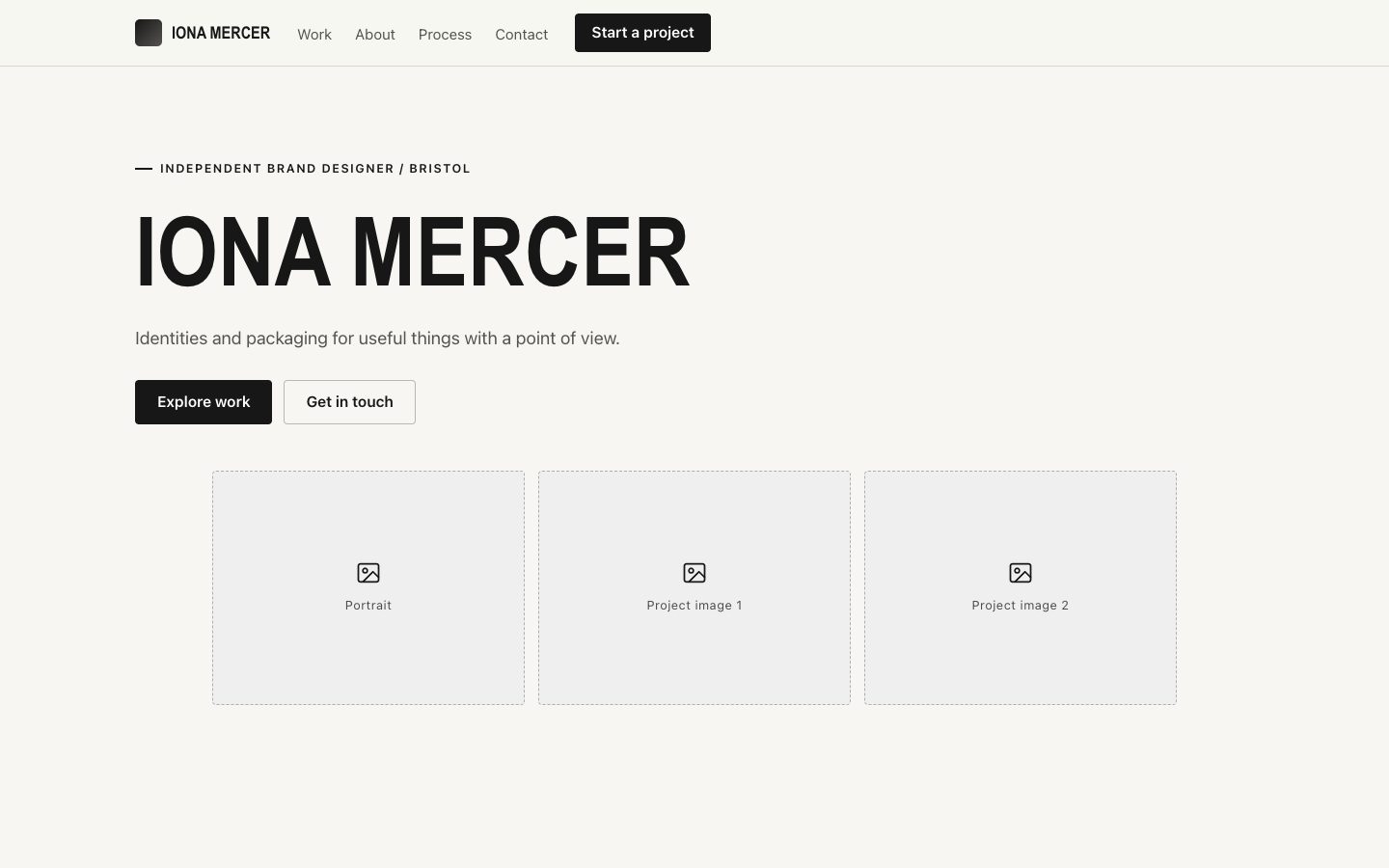
$4.99An editorial portfolio for a solo brand designer. A bold nameplate, generous project imagery, numbered work index, and compact service details make the work memorable without getting in its way.
 $4.99
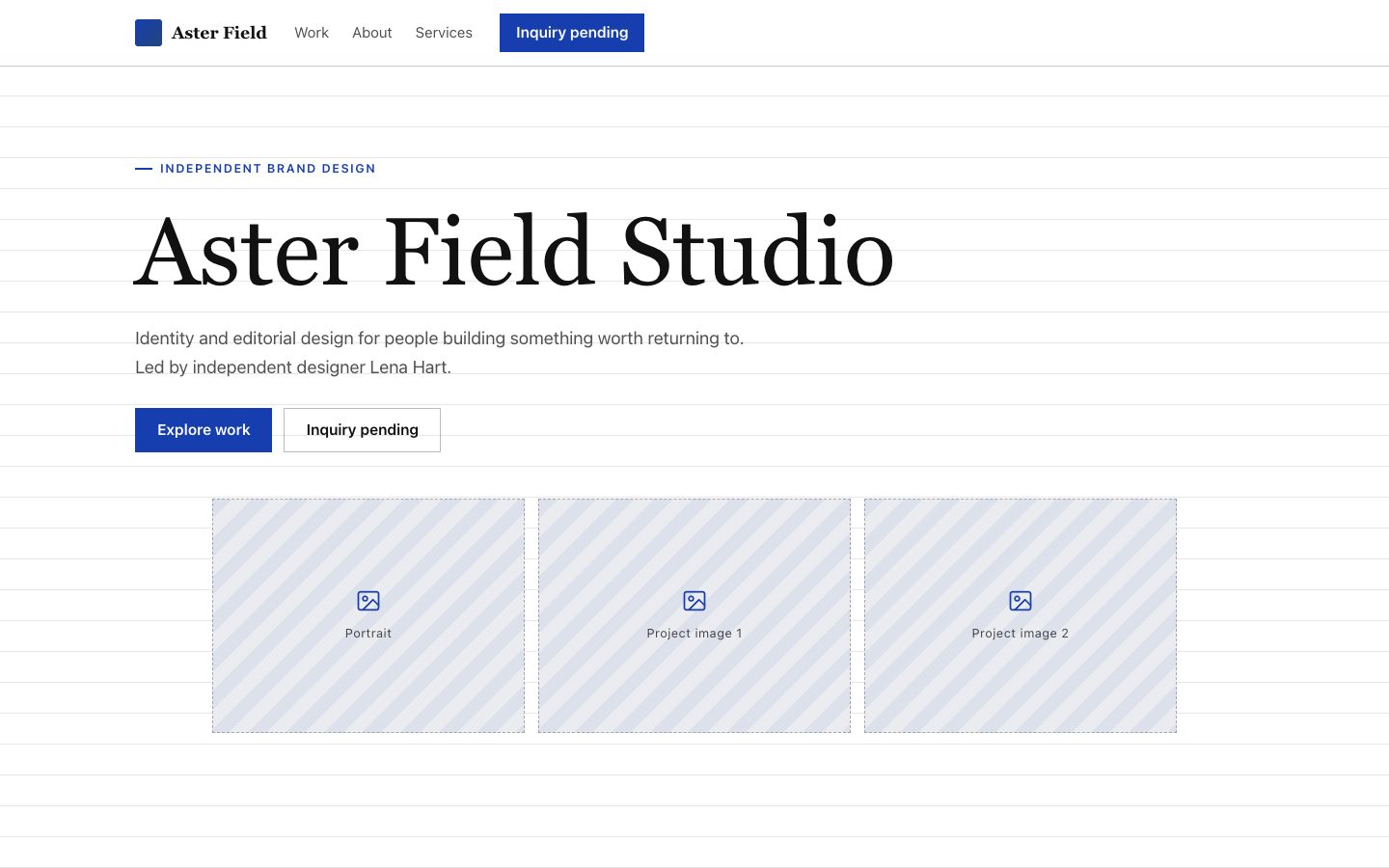
$4.99Create an editorial portfolio for an independent brand designer, with a disciplined cobalt palette, expressive serif headlines, project-led storytelling, and a practical path from selected work to inquiry.
 $4.99
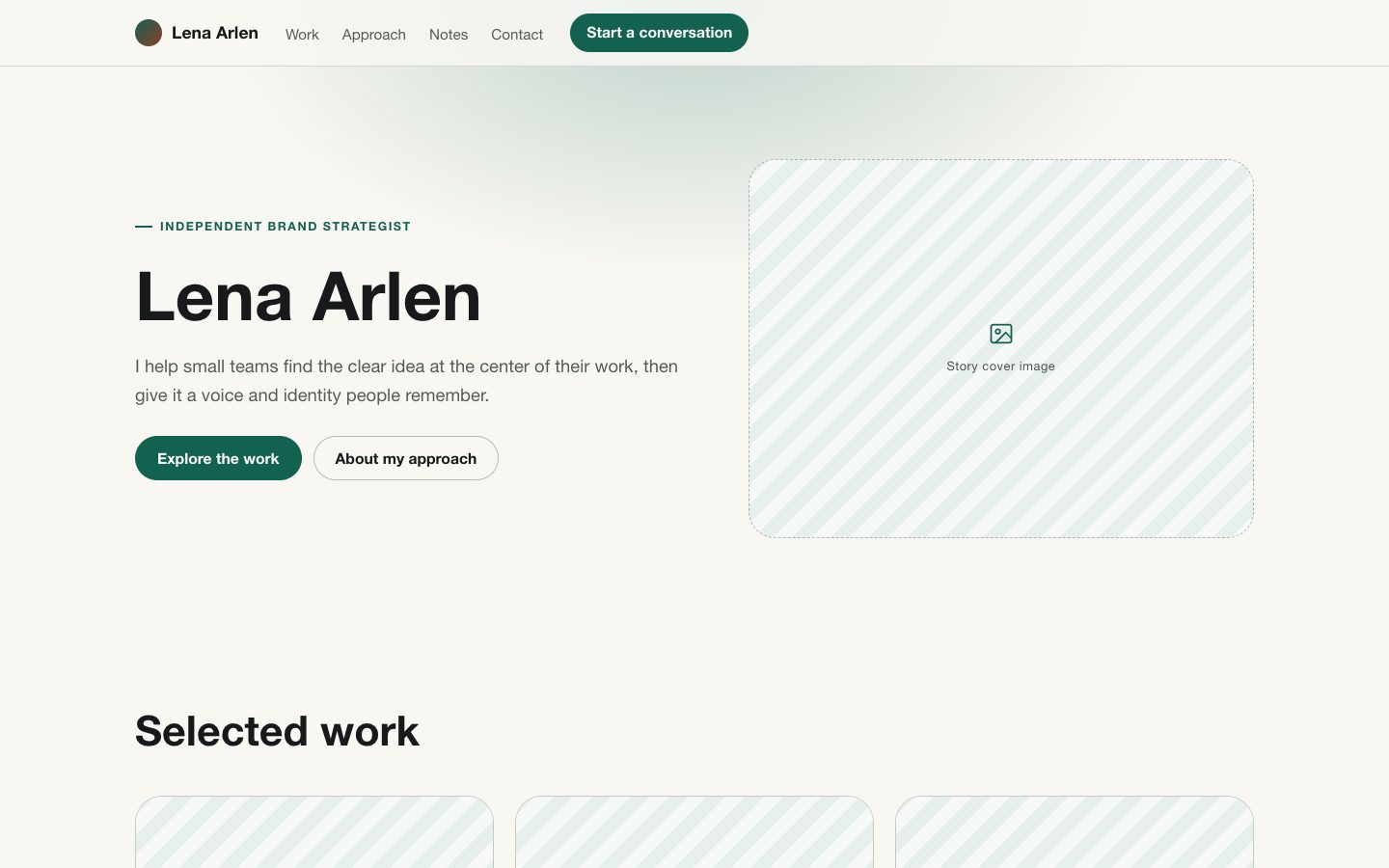
$4.99A portrait-led landing page for an independent professional who needs to show both a distinct point of view and credible work. The editable layout combines sharp grotesk typography, bracket-like rules, selected bold phrases, and a warm off-white ground.
 $4.99
$4.99An editable, portrait-led portfolio for an independent brand designer, built around a lime page frame, white project sheets, and a dark practice band. Client credits, testimonials, and figures appear only when approved source material is supplied.
 $4.99
$4.99A signature portfolio website for an independent creative studio, combining editorial typography with a tactile collage system. It makes selected work, process, and contact paths feel art-directed without turning the page into an unreadable mood board.
 $4.99
$4.99Create a tactile editorial website for a small creative collective that turns cultural stories, places, and people into memorable visual identities, campaigns, and printed matter.
 $4.99
$4.99An editable, product-led website for a silver service robot, pairing clear technical specifications with distinctive dark-stage imagery and a restrained signal glow.