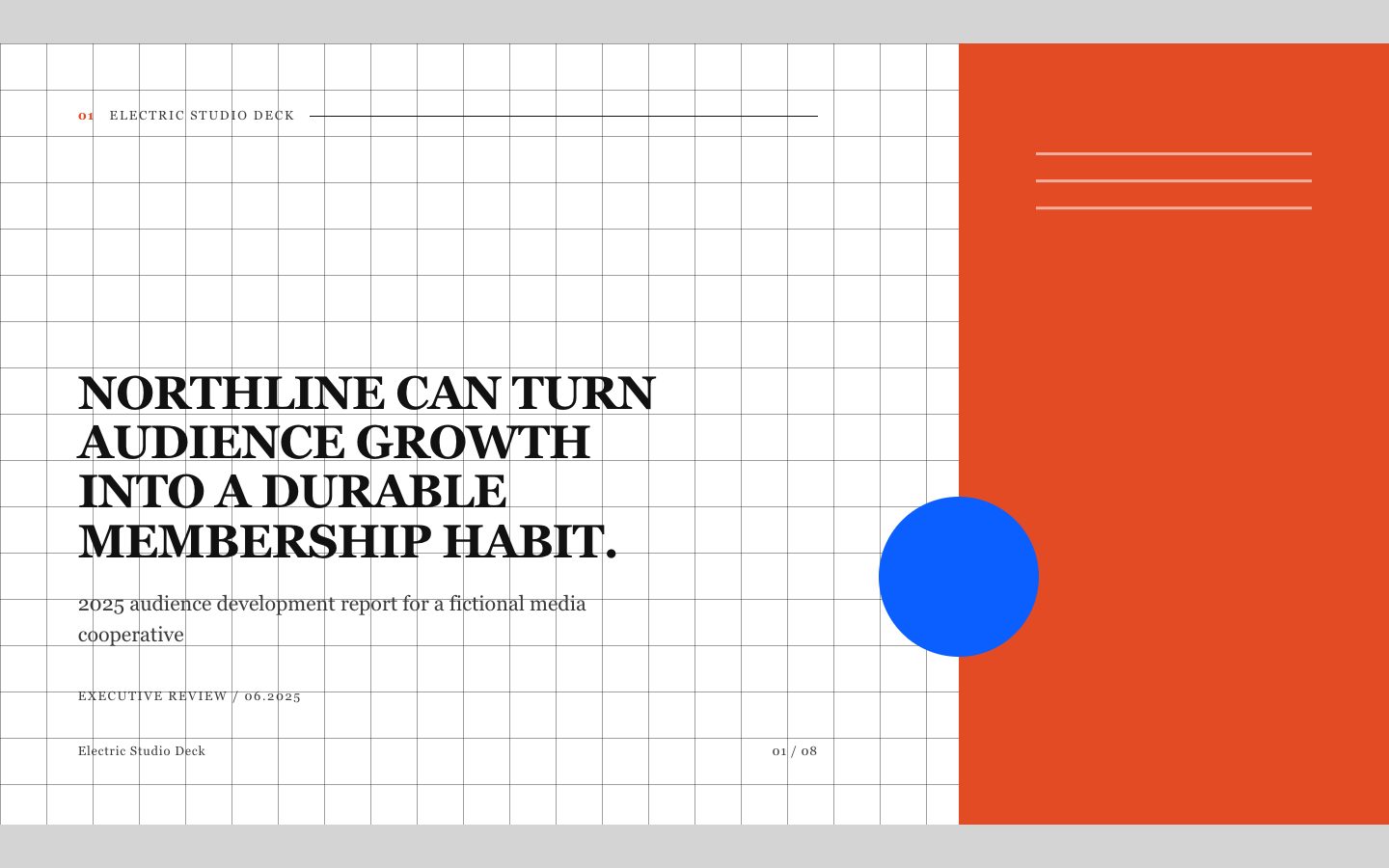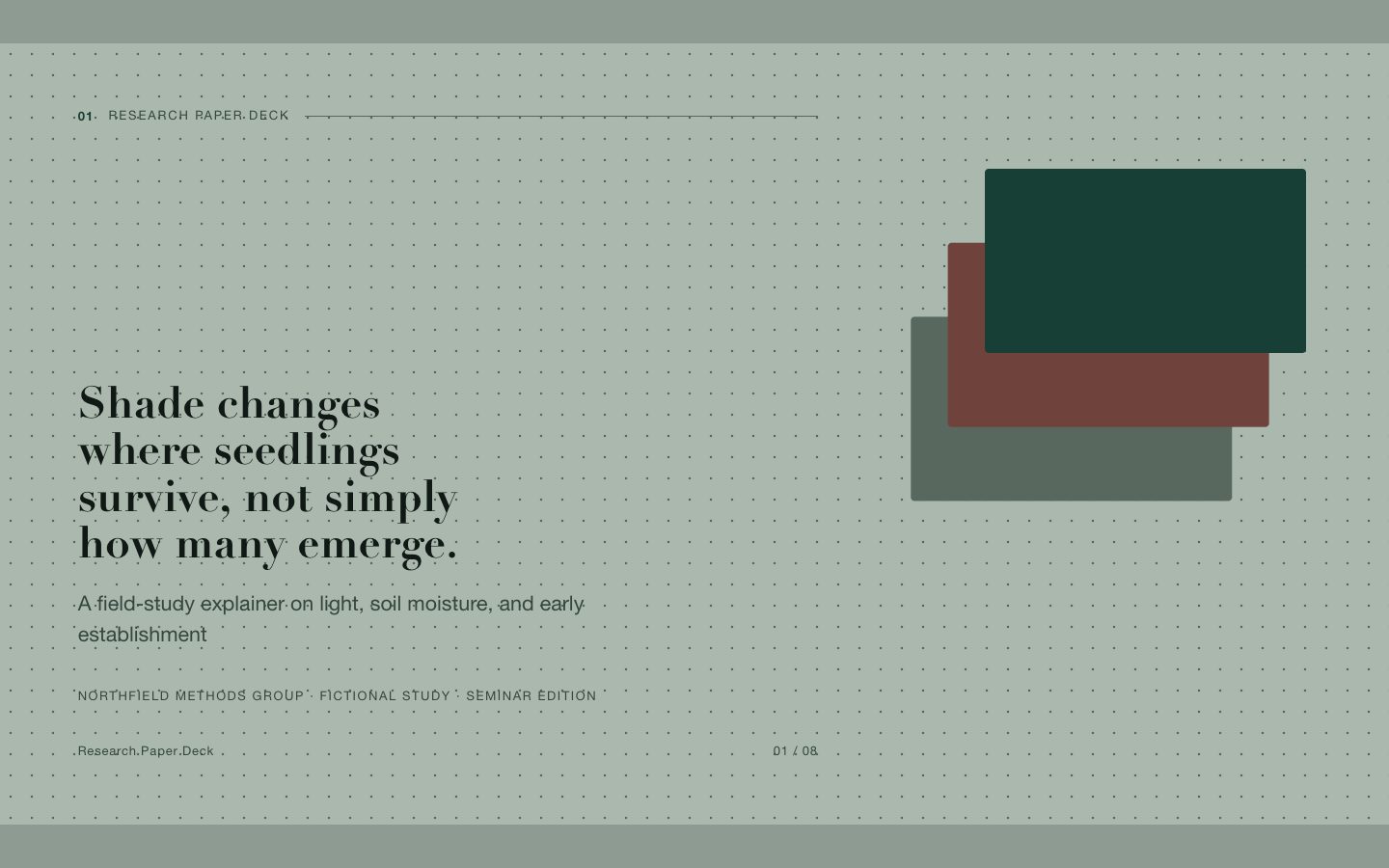
演示文稿免费 已验证

可编辑视觉演示文稿

制作可离线使用的 HTML 演示文稿,以深色模块网格、鲜明的结论式标题和可编辑图表呈现内容。适合需要精致视觉效果、又要反复修改的产品发布和高管汇报。

你会得到

  • 独立运行的 16:9 HTML 演示文稿
  • 可编辑的文字、图表、示意图和视觉模块
  • 统一的网格、配色与页面层级
  • 页面导航和适合打印的样式

适合

  • 面向内部或客户决策者的产品发布汇报
  • 用证据推动决策的管理层进展汇报
  • 后续需要多次修改内容的演示文稿

不适合

  • 逐像素复刻已有演示文稿
  • 只交付无法编辑的幻灯片图片
  • 只需要原生演示文稿文件的项目

你需要提供

  • 受众与演示目标
  • 资料、论点和数据
  • 产品或项目名称
  • 必需章节或目标页数

运行要求

  • A modern browser
  • Node.js 20+ for the validator

运行成本

No external services. Runs entirely on your agent.

试试这个提示词

/sl-editable-visual-deck 为虚构的 Sample Software Studio 产品 Workspace Hub 制作恰好 9 页演示文稿,帮助部门负责人决定是否试点。依次介绍协作问题、产品方案与能力、示例采用情况、试点计划和审批请求。标题页:“One workspace can make team decisions easier to find.” 结尾页:“Approve the pilot to validate the launch case.” 使用可编辑的 Signal Blocks 风格视觉元素。

后续提示词

  • 用这些已确认的试点数据替换示例模型,并更新图表结论。
  • 保持视觉系统不变,将文稿调整为适合五分钟高管汇报的版本。
  • 为每页添加讲者备注,说明该页结论的依据。

验证情况

已验证

render-checkpass5.0 / 537s

常见问题

交付后还能修改图表吗?

可以。图表的标签、数值和形状由可编辑的 HTML、CSS 或 SVG 元素构成,并非整页图片。

如果资料里没有数字怎么办?

可以使用定性对比和流程示意图;不会把编造的指标当作事实呈现。

演示文稿可以离线使用吗?

可以。交付物使用系统字体,并按独立运行的方式制作。

SKILL.md

SKILL.md

Editable Visual Deck

Turn launch plans and executive updates into a distinctive HTML deck made of editable visual components.

Style: Signal Blocks. Precise and energetic, like a product story assembled from a visible system of modular parts. Follow references/style-guide.md exactly.

Use this skill when

  • A product launch narrative for internal or client stakeholders
  • An executive update that turns evidence into decisions
  • A presentation that will undergo several content revisions

Do not use

  • Pixel-identical reproduction of an existing presentation
  • Image-only decks whose slide content does not need editing
  • Reports requiring a native presentation file as the sole deliverable
  • To reproduce another company's brand, logo, product UI or copyrighted characters.

Inputs

  • Presentation goal, audience, and desired decision or response
  • Source material, including approved claims, figures, and dates
  • Product or project name and positioning
  • Preferred slide count and any required sections
  • Brand colors or visual constraints, if available

If something essential is missing, ask one short question before starting. Never invent facts, numbers, quotes or customer names; mark gaps as [needs source].

Workflow

  1. Read all source material. Separate facts from opinions and keep the user's terminology; mark missing facts as [needs source] instead of inventing quotes, numbers or names.
  2. Write the title spine first: one action title per slide (a full sentence with a verb). Read the titles in order; they must make the argument on their own.
  3. Copy references/template.html to the output path, for example deck.html. Keep its paging engine, overview mode (press o), notes panel (press n) and print stylesheet intact.
  4. Apply the tokens from references/style-guide.md (they are already set in the template's :root); do not add other colors or webfonts.
  5. Choose layouts from references/layouts.md. Never use the same layout on more than two consecutive slides. Copy the matching example slide, fill every REPLACE_ value and delete unused examples.
  6. Keep body text under 40 words per slide; move detail into speaker notes. Write notes for every data-slide-id in window.__SLIDE_NOTES__; notes add delivery context and do not repeat the slide.
  7. Icons and diagrams are inline SVG only (the template's icon set or simple shapes in token colors). Never use emoji, icon fonts or remote images.
  8. Run the validator and fix every problem it reports:

``bash node scripts/validate-deck.mjs deck.html --expected-slides 8 ``

  1. Open the deck in a browser: check arrow keys, overview, notes, a 390px wide window and print preview (one 16:9 slide per page).

What makes this excellent

  • Extract one decision-relevant claim per slide and write it as a complete action title before choosing a layout.
  • Map the story from context to evidence to implication to next action; use the construction grid to make that progression visible.
  • Keep all supplied figures exact and label illustrative or assumed figures explicitly.
  • Use proportional, labeled native shapes for charts; include units, baselines, and a concise takeaway.
  • Vary block scale and placement across slides while preserving the same column grid, type hierarchy, and color roles.
  • Check each slide at presentation size for clipped text, legibility, and whether every meaningful object can be edited independently.

Output contract

  • One file, deck.html, 16:9, self-contained (no network requests, no storage APIs), opens from file://.
  • Exactly the requested number of section.slide elements, each with a unique data-slide-id and speaker notes.
  • A short hand-off note: slide count, layouts used, sources used, any [needs source] gaps, and the validator output.
  • Deliver a self-contained 16:9 HTML deck that works offline.
  • Keep slide text, charts, and diagrams editable as native document objects.
  • Provide clear slide navigation and print styling for presentation or PDF export.

Reference demo and agent run

The preview is a reference deck built from sample content. Figures on chart and stat slides are sample data and say so in the slide footer; image areas are labelled slots. In a real run the agent uses the user's sources and assets, adds a source note to every slide that states a figure or claim, and keeps every promise in the output contract above.

Failure rules

  • If the validator fails, fix the deck and run it again; do not hand over a failing deck.
  • If source material contradicts itself, show both claims and flag it in the notes instead of choosing one silently.
  • If the user needs an editable PowerPoint file, say that this skill delivers HTML before starting.

相似技能

可编辑视觉演示文稿 · SkillLoom