WebFree Verified

Cadence Marketing Landing Page

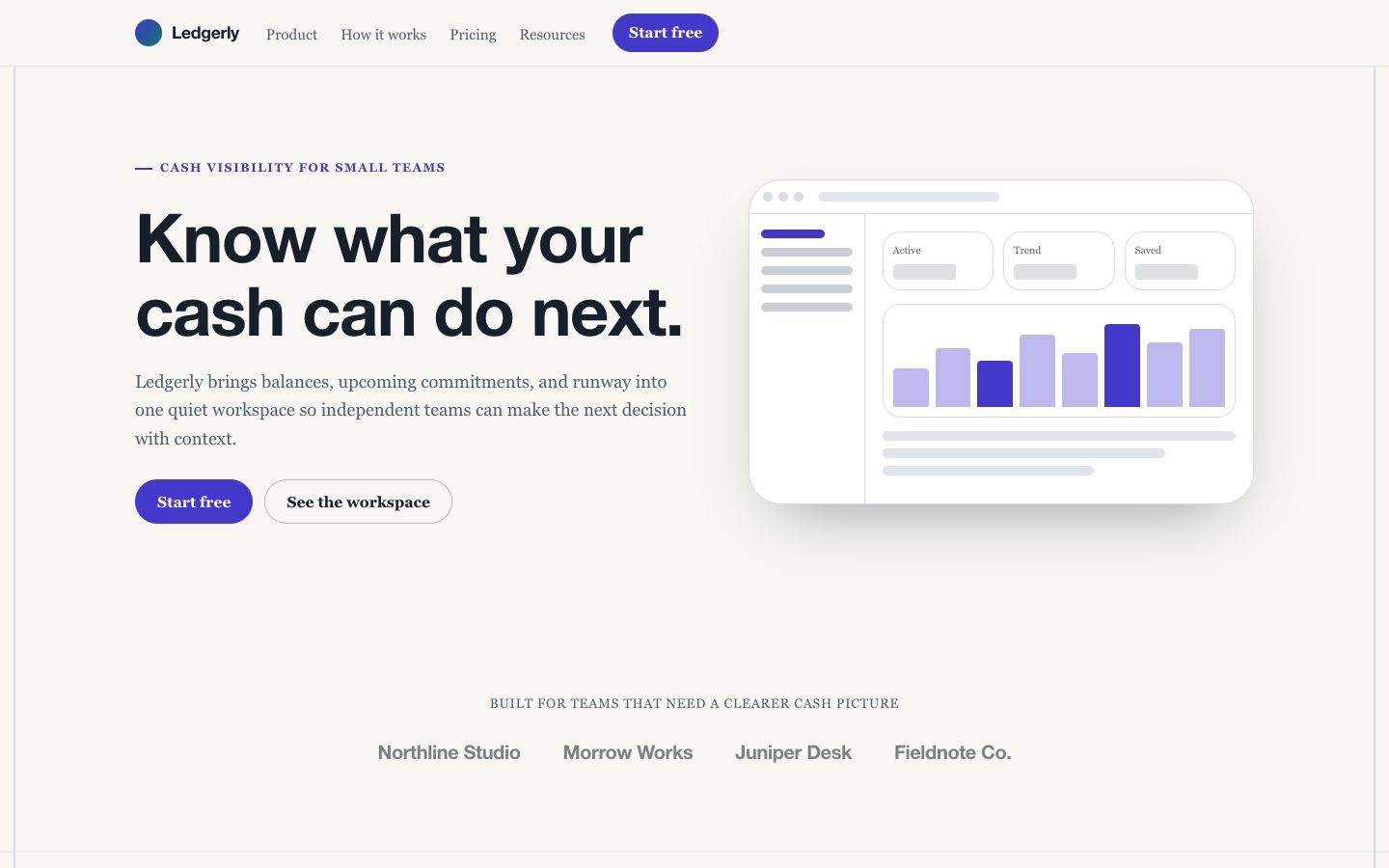
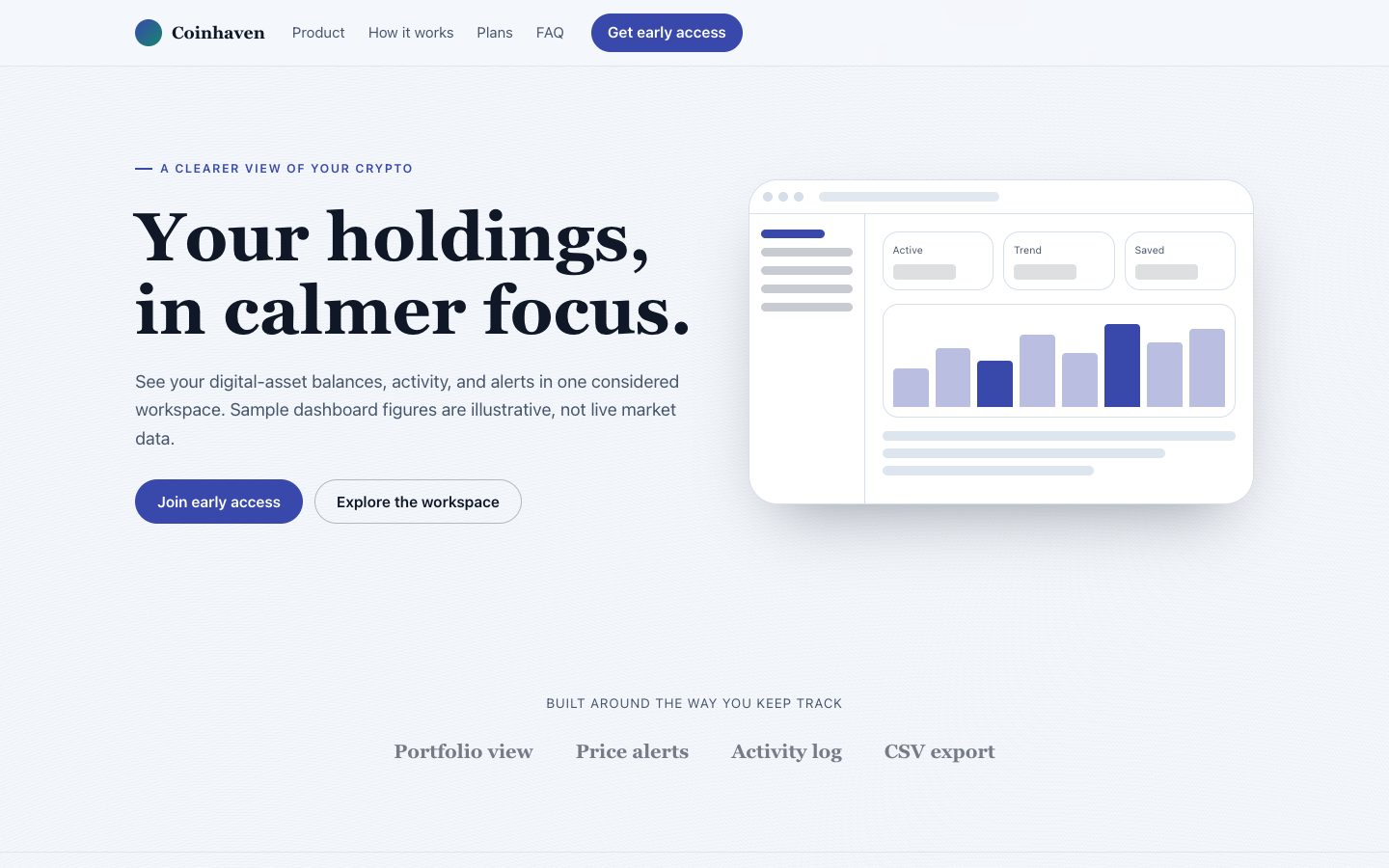
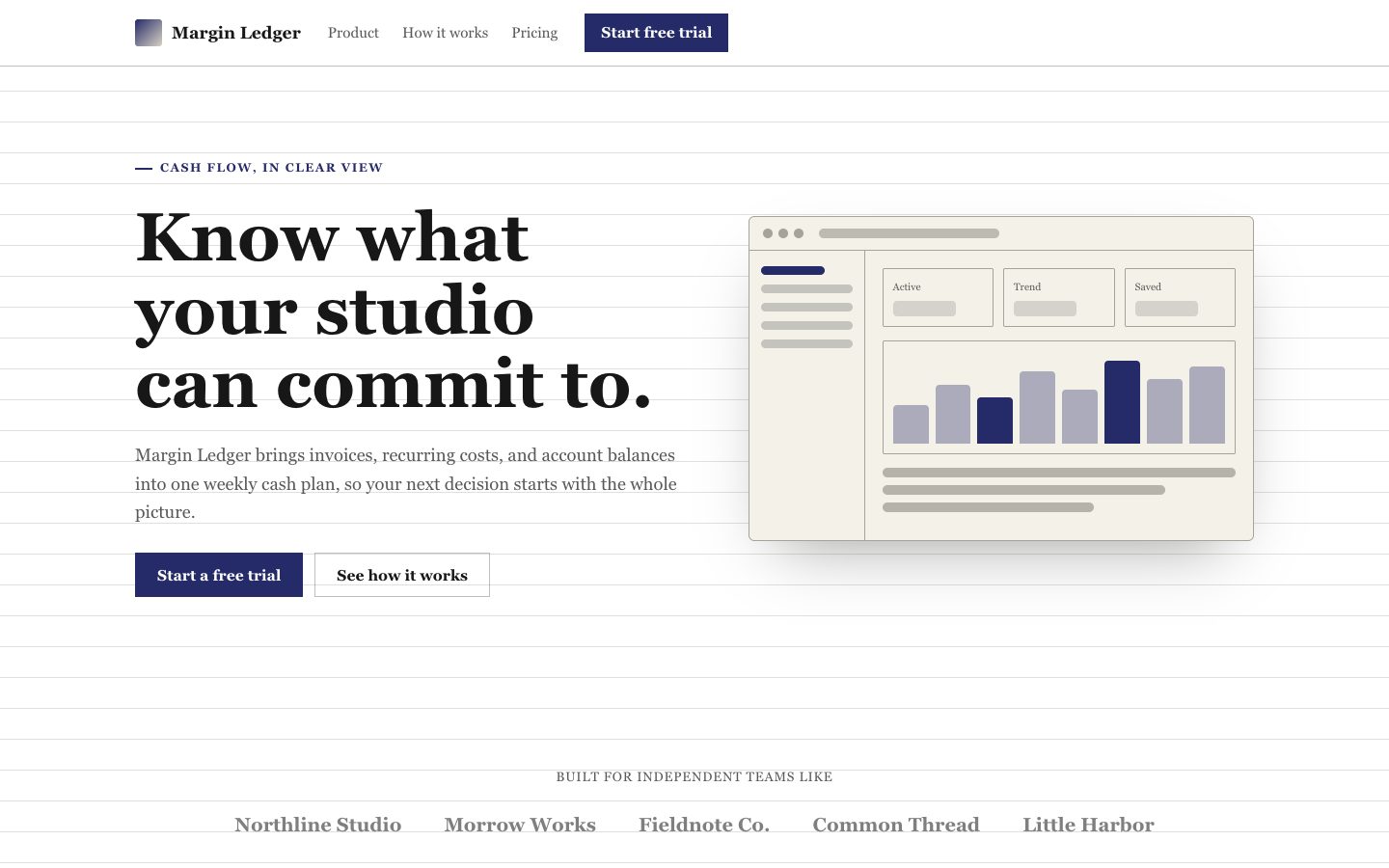
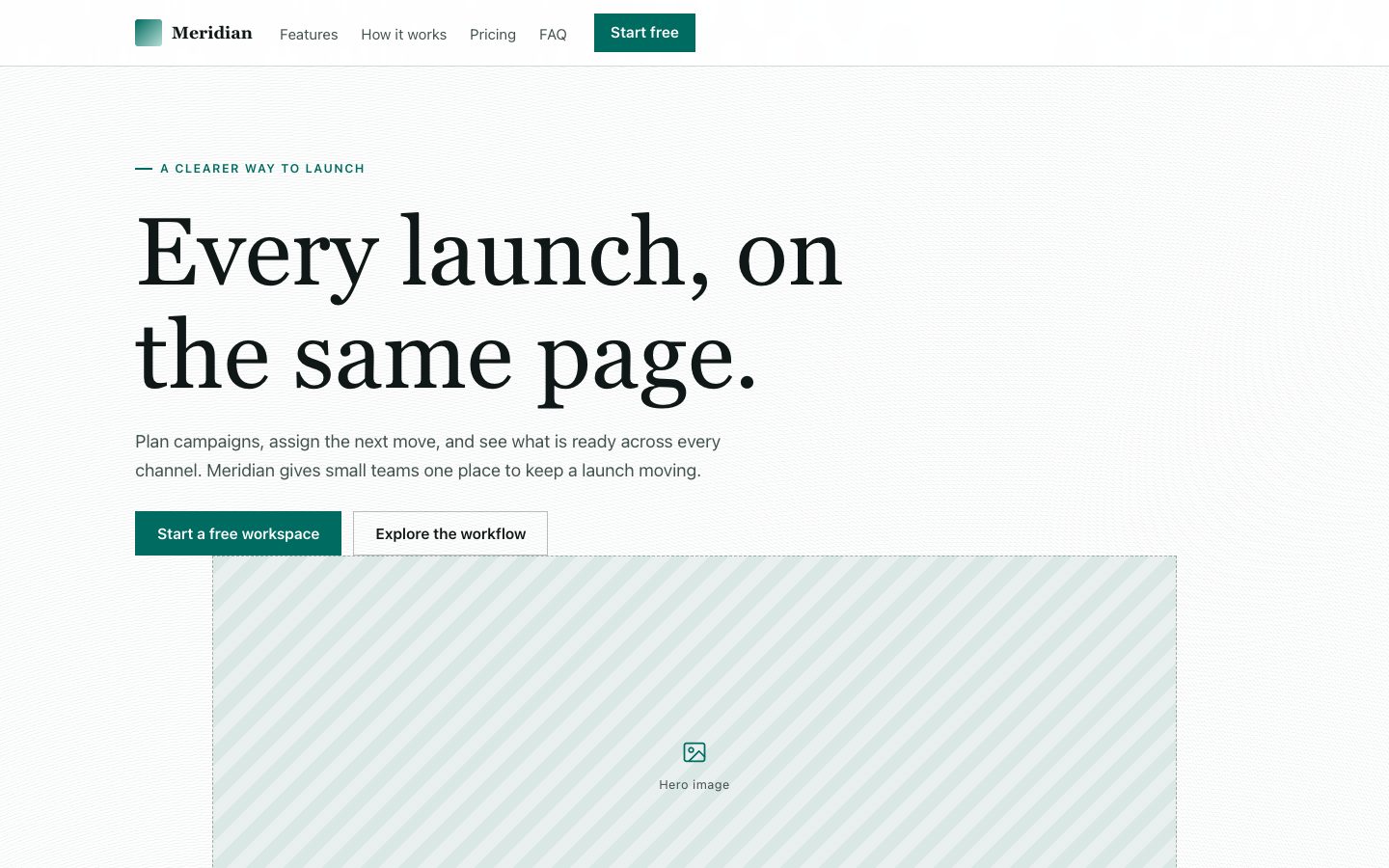
A conversion-focused software landing page with a campaign-grid visual system, CSS product mockups, concrete launch copy, pricing, and purchase-focused FAQs.

What you get

  • A complete responsive page from navigation through footer
  • A product-led hero and legible campaign workspace preview
  • Feature, workflow, pricing, and FAQ sections
  • Accessible interactions and reduced-motion styling

Good fit

  • A founder launching a campaign coordination tool
  • A growth marketer replacing a generic product page
  • A small team that can supply real pricing and product details

Not for

  • A brand campaign without a software product
  • A page dependent on fabricated testimonials or results

What you provide

  • Product name and buyer
  • Core workflow and real capabilities
  • Primary CTA and destination
  • Pricing and trial terms

Requirements

  • A modern browser
  • Node.js 20+ for the validator

Running cost

No external services. Runs entirely on your agent.

Try this prompt

/sl-cadence-marketing-landing-page Create a Launch Grid-style launch page for Pacefield, for solo founders coordinating their first launch. Show a hero headed “Pacefield,” features, a readable campaign-plan split section, three launch steps, a campaign gallery, Free ($0 forever) and Studio ($24/month) pricing, an FAQ, and a closing CTA headed “Make the next launch easier to see” with “Start free.”

Follow-up prompts

  • Replace the CSS preview with these approved product screenshots while keeping the same layout.
  • Adapt the page for a paid acquisition campaign with a shorter mobile hero.
  • Audit every CTA, pricing statement, and FAQ answer against this product brief.

Verification

Verified

render-checkpass4.0 / 571s

FAQ

Can this use screenshots from my product?

Yes. Supply screenshots and the page can incorporate them while preserving the grid layout and device framing.

Will it invent conversion statistics?

No. The page uses only approved results and customer proof; otherwise it explains capabilities without numerical claims.

Can I use it without a build step?

Yes. The default deliverable is a self-contained HTML file with system fonts and no required external assets.

SKILL.md

SKILL.md

Cadence Marketing Landing Page

Turn a software launch brief into a complete landing page that makes the product visible and the next action clear.

Style: Launch Grid. A precise, energetic launch workspace with the visual discipline of a campaign plan. Follow references/style-guide.md exactly.

Use this skill when

  • A founder launching a campaign coordination tool
  • A growth marketer replacing a generic product page
  • A small team that can supply real pricing and product details

Do not use

  • Editorial homepages or content-heavy publications
  • Launches without a defined product, buyer, or conversion action
  • Pages that require invented customer endorsements or performance claims
  • To reproduce another company's brand, logo, product UI or copyrighted characters.

Inputs

  • Product name, one-sentence value proposition, and primary conversion goal
  • Target buyer and the launch problem they need solved
  • Three to five actual capabilities and any product screenshots or interface details
  • Pricing, trial terms, and destination URLs for calls to action
  • Approved proof, legal copy, and contact details, if available

If something essential is missing, ask one short question before starting. Never invent facts, numbers, quotes or customer names; mark gaps as [needs source].

Workflow

  1. Read the brief and references/section-library.md. List the sections the page needs, in order, before writing any markup.
  2. Copy references/template.html to index.html. Delete the sections the brief does not need; reorder the rest.
  3. Apply the tokens from references/style-guide.md in the :root block. Do not introduce colors, fonts or radii outside the tokens.
  4. Write real copy from the user's brief for every REPLACE_ placeholder, inside the word limits. Never invent customer names, logos or numbers; label fictional testimonials and figures as sample content.
  5. Check the layout at 390px, 768px and 1280px wide: no horizontal scrolling, readable type, tap targets at least 44px.
  6. If the user works in React/Next.js, Vue or Tailwind, port the result with references/framework-adaptation.md after the HTML version passes.
  7. Run the validator and fix every problem it reports:

``bash node scripts/validate-html.mjs index.html ``

  1. Open the file in a browser (from file://) and check keyboard focus, the FAQ toggles and the mobile menu.

What makes this excellent

  • Lead with the product name, then state the buyer, launch task, and practical outcome within the first viewport.
  • Make the hero product mockup depict a campaign timeline with channel-specific assets, owners, and approval states; its content must match the feature copy.
  • Use a visible grid as the page's organizing idea, carrying it through section numbering, alignment, and the campaign interface.
  • Give the primary call to action one consistent label and destination; make the secondary action lead to the product preview or a working demo.
  • Show the actual pricing and trial conditions supplied by the user. If they are missing, request them or mark example prices clearly before publishing.
  • Write FAQ answers for purchase decisions such as setup effort, collaborators, cancellation, and what the trial includes.
  • Check the full page at narrow mobile and wide desktop sizes, including mockup legibility, keyboard access, contrast, and reduced-motion behavior.

Output contract

  • index.html: one self-contained HTML file (inline CSS, inline SVG, no network requests, no storage APIs) that opens from file://.
  • Exactly one <h1>, labelled form inputs, alt text on every image, no REPLACE_ placeholders or filler text.
  • Responsive at 390 / 768 / 1280px, using only the style-guide tokens.
  • A hand-off note: sections used, any sample content that must be replaced, framework port (if any) and the validator output.
  • Deliver one responsive, self-contained HTML page with embedded CSS and minimal JavaScript, or port the same design to the requested framework.
  • Include working navigation anchors, calls to action, FAQ controls, focus states, and reduced-motion support.
  • Flag any illustrative pricing or product data that must be replaced before publication.

Reference demo and agent run

The preview (preview/demo.html) is a static reference built from sample content: it shows the layout, style, copy structure and the visible controls every interactive part needs (labelled form fields, carousel buttons, player chrome). Image areas are labelled placeholders and sample quotes or figures are marked as samples. In a real run the agent uses the user's content and assets, wires behaviour (form destinations, media sources, data) and keeps every promise in the output contract above.

Failure rules

  • Never hand over a file that fails the validator; fix it and run it again.
  • If the brief lacks facts (prices, numbers, customer names), ask once; otherwise mark them clearly as sample content.
  • Do not reproduce another company's website, logo or copy, even if asked to "make it look like" one; build an original page in this style instead.

Similar skills