 $4.99
$4.99Electric Studio(演示文稿)
用于高管汇报的付费级 HTML 演示文稿技能,将经过核验的材料整理为鲜明的编辑式叙事。高对比网格、衬线展示字体、电光强调色与克制的复古摄影方向共同形成稳定的系列风格,同时保持清晰易读。
将出版业务复盘和管理层汇报材料制作成风格统一的16:9 HTML演示文稿。采用鲜明的编辑式标题、清晰的数据图表、冷白底色和克制的赭色强调。
No external services. Runs entirely on your agent.
/sl-ochre-editorial-deck 为虚构的地区出版工作室 North District Publishing 制作恰好9页的第二季度报告:围绕付费读者增长、留存风险、编辑复盘和三步留存测试展开,最后提出三项编辑选择及下一周期行动。采用 Ochre Margin 风格。标题用“PAID READERSHIP GREW, BUT RETENTION NEEDS ATTENTION.”,并以“APPROVE THE RETENTION TEST BEFORE THE NEXT CYCLE.”收尾。
已验证
| render-check | pass | 5.0 / 5 | 111s |
可以。请提供笔记、汇报对象和决策目标。演示文稿会据此组织论证顺序,同时保持已核实事实不变。
会标记为待确认或从成稿中省略,不会把编造的数字写成已报告的结果。
Turn reporting material into a polished editorial slide deck with action-led headlines, disciplined typography, and evidence-first layouts.
Style: Ochre Margin. A crisp publishing review with ink-dark type, cool paper, and measured ochre emphasis. Follow references/style-guide.md exactly.
If something essential is missing, ask one short question before starting. Never invent facts, numbers, quotes or customer names; mark gaps as [needs source].
[needs source] instead of inventing quotes, numbers or names.references/template.html to the output path, for example deck.html. Keep its paging engine, overview mode (press o), notes panel (press n) and print stylesheet intact.references/style-guide.md (they are already set in the template's :root); do not add other colors or webfonts.references/layouts.md. Never use the same layout on more than two consecutive slides. Copy the matching example slide, fill every REPLACE_ value and delete unused examples.data-slide-id in window.__SLIDE_NOTES__; notes add delivery context and do not repeat the slide. ``bash node scripts/validate-deck.mjs deck.html --expected-slides 8 ``
deck.html, 16:9, self-contained (no network requests, no storage APIs), opens from file://.section.slide elements, each with a unique data-slide-id and speaker notes.[needs source] gaps, and the validator output.The preview is a reference deck built from sample content. Figures on chart and stat slides are sample data and say so in the slide footer; image areas are labelled slots. In a real run the agent uses the user's sources and assets, adds a source note to every slide that states a figure or claim, and keeps every promise in the output contract above.
$4.99用于高管汇报的付费级 HTML 演示文稿技能,将经过核验的材料整理为鲜明的编辑式叙事。高对比网格、衬线展示字体、电光强调色与克制的复古摄影方向共同形成稳定的系列风格,同时保持清晰易读。
 $4.99
$4.99为媒体出版领域的客户或管理层制作具有杂志编排质感的 HTML 演示文稿。用醒目的标题、框线和克制的色块呈现受众表现、内容重点与投入建议,同时保留数据来源。
 $4.99
$4.99面向媒体与出版团队的高质感管理层汇报演示文稿,强调清晰分析、数据准确,并采用鲜明的蓝绿编辑式台账视觉风格。
 $4.99
$4.99为课程创作者和设计师制作手绘风格、原色鲜明的演示文稿,适用于精致的客户报告。严格保留事实与原文,同时让系列幻灯片统一、生动且易读。
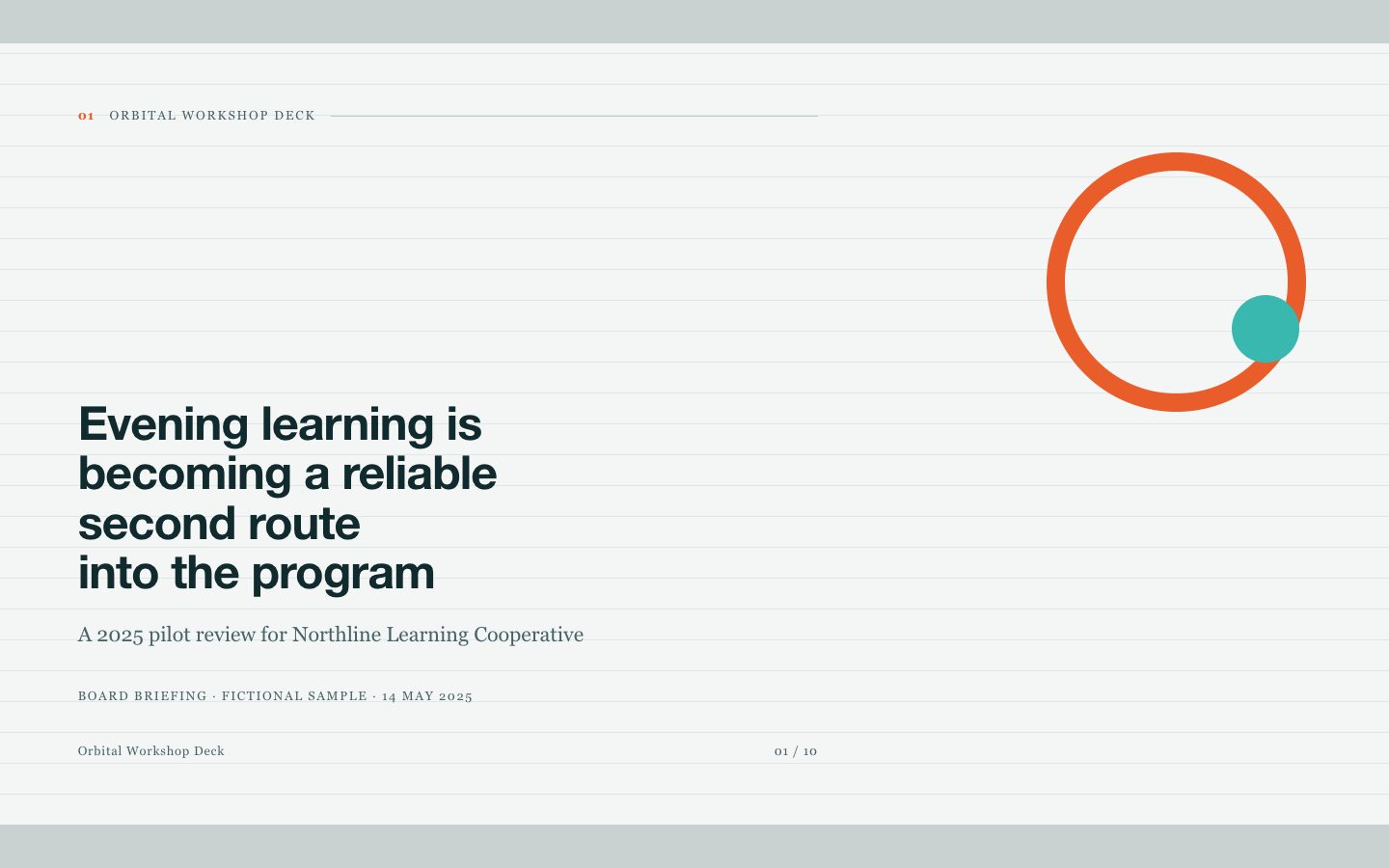 $4.99
$4.99一套具有鲜明编辑感的演示文稿系统,适合把课程洞察和高管报告整理成温暖、清晰且结构严谨的视觉叙事。水绿色纸张底色、橙色信号标记、圆形工作坊图示和克制的字体层级,帮助观众从背景走向决策,同时保留数字背后的真实细节。
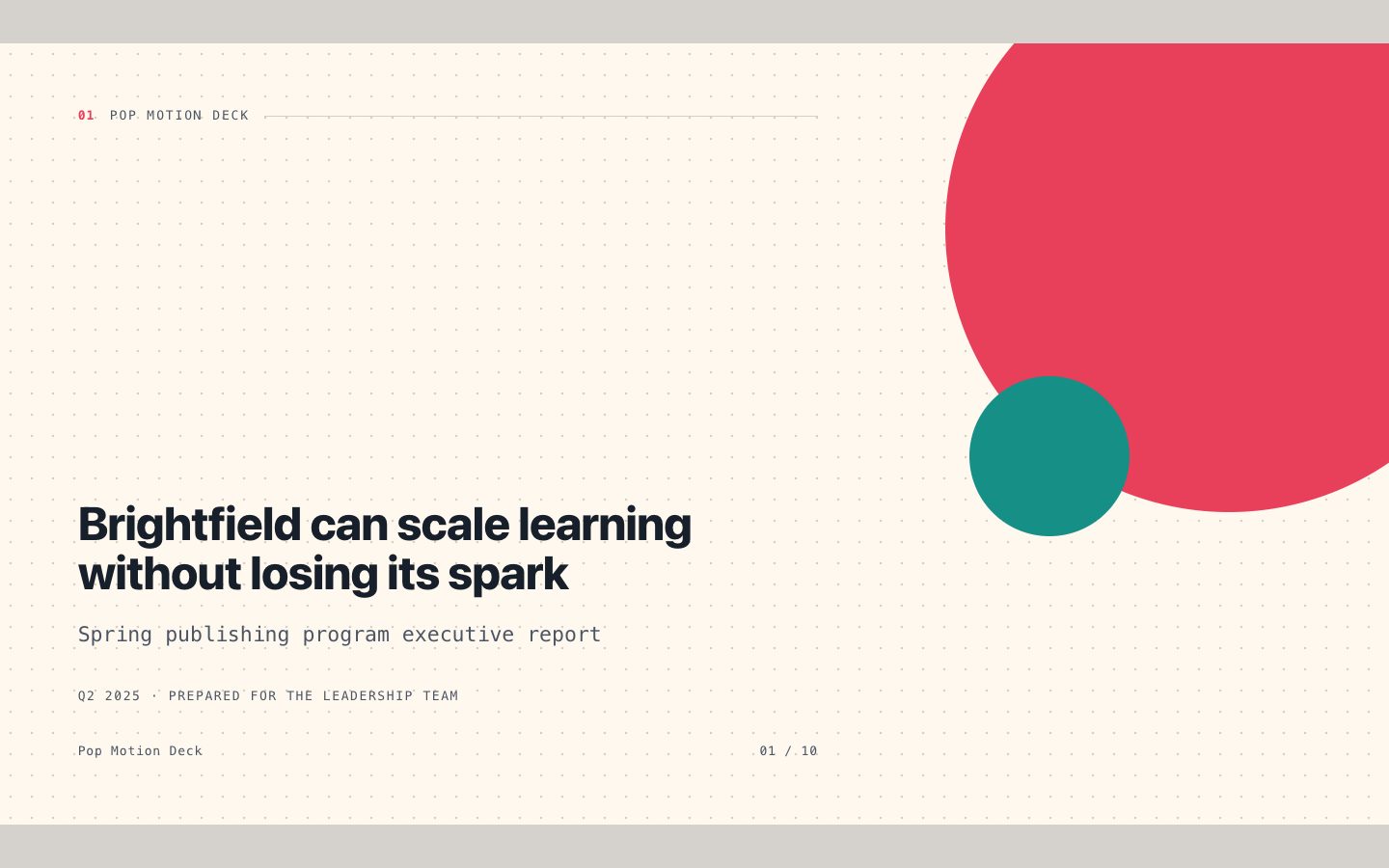 $4.99
$4.99用于高管报告、课程发布和编辑更新的高完成度演示文稿技能,适合需要鲜明电流流行视觉和清晰决策叙事的场景。它结合层叠圆角面板、受控高饱和色彩、圆点图案、等宽证据标签和俏皮的棚拍摄影方向,生成可离线打开的自包含 HTML 演示文稿。
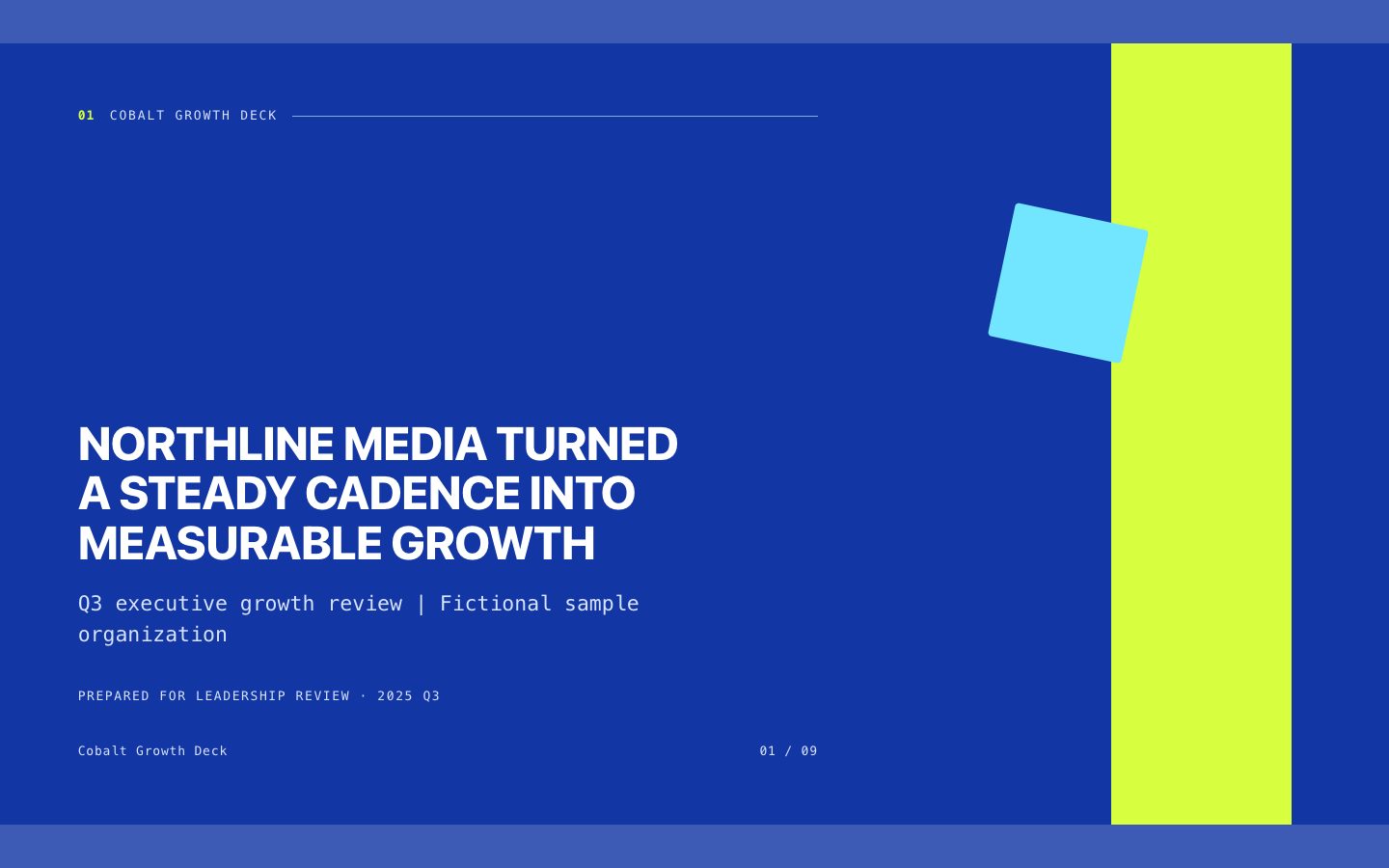 $4.99
$4.99用于把增长证据整理成清晰决策叙事的高质量执行层报告演示文稿。它以高饱和钴蓝为画布,以荧光黄绿色标记运营信号,配合等宽字体注释和纪实感企业摄影,让每一页都易读、可信且具有连续的系列风格。
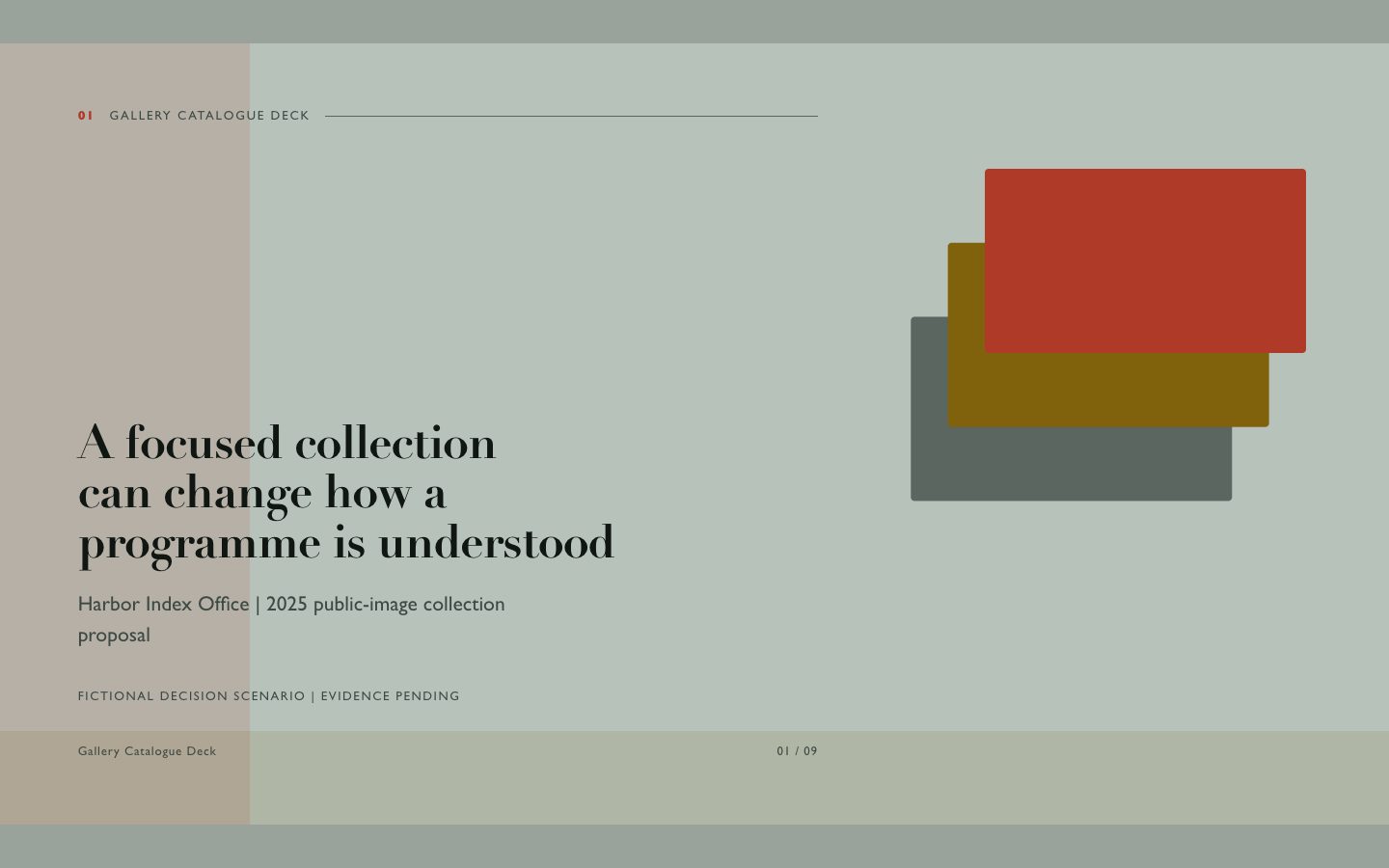 $4.99
$4.99一套面向客户和管理层的编辑型演示文稿,用于把视觉作品集和有来源依据的表现数据组织成清晰的决策故事。它结合鲜明摄影、错位色块和准确的目录信息,并明确标示尚缺证据的内容。