 免费
免费文章简报演示文稿
把文章或研究资料整理成适合教学、课程设计和编辑评审的证据优先型演示文稿。它保持论断准确,同时让论证结构易于浏览、讲解和转化为行动。
适合讲解学习循环或汇报培训试点的演示文稿技能。它将原始材料整理为宽屏幻灯片,以统一的四阶段循环、明确的结论标题、具体练习活动和标注清楚的证据呈现内容。
No external services. Runs entirely on your agent.
/sl-learning-loop-deck 为虚构的 Regional Training Office 制作恰好九页简报,介绍面向新入职服务协调员的四周培训试点:从学习差距讲到练习与反馈循环、示例结果,最后作出是否扩大的决策。标题:“A shorter learning loop can make onboarding practice stick.” 结尾:“Approve a small pilot and review the evidence before scaling.” 采用 Loop in Motion 风格。
已验证
| render-check | pass | 4.0 / 5 | 16s |
可以。演示文稿可用于说明拟议方案,但会将目标和示例数字明确标为拟定或示例,不会当作实测成果。
可以。请提供必须使用的术语及定义;循环阶段名称可以调整,但顺序和视觉标识会保持一致。
Turn learning-program material into a clear, presentation-ready story with a visible cycle of practice, feedback, and improvement.
Style: Loop in Motion. Bright, assured, and learner-centered, with the energy of a workshop and the discipline of an executive report. Follow references/style-guide.md exactly.
If something essential is missing, ask one short question before starting. Never invent facts, numbers, quotes or customer names; mark gaps as [needs source].
[needs source] instead of inventing quotes, numbers or names.references/template.html to the output path, for example deck.html. Keep its paging engine, overview mode (press o), notes panel (press n) and print stylesheet intact.references/style-guide.md (they are already set in the template's :root); do not add other colors or webfonts.references/layouts.md. Never use the same layout on more than two consecutive slides. Copy the matching example slide, fill every REPLACE_ value and delete unused examples.data-slide-id in window.__SLIDE_NOTES__; notes add delivery context and do not repeat the slide. ``bash node scripts/validate-deck.mjs deck.html --expected-slides 8 ``
deck.html, 16:9, self-contained (no network requests, no storage APIs), opens from file://.section.slide elements, each with a unique data-slide-id and speaker notes.[needs source] gaps, and the validator output.The preview is a reference deck built from sample content. Figures on chart and stat slides are sample data and say so in the slide footer; image areas are labelled slots. In a real run the agent uses the user's sources and assets, adds a source note to every slide that states a figure or claim, and keeps every promise in the output contract above.
免费把文章或研究资料整理成适合教学、课程设计和编辑评审的证据优先型演示文稿。它保持论断准确,同时让论证结构易于浏览、讲解和转化为行动。
 $4.99
$4.99把课程资料制作成可离线使用的 HTML 教学演示文稿。纯白版面、青绿色逻辑线、准确术语与多样化教学布局贯穿整套幻灯片,适合课程创作者和设计师讲解流程、系统与数据。
 $4.99
$4.99把报告、活动叙事和创意策略转化为有强烈编辑感的红黑杂志式演示文稿。它适合高管快速阅读,同时保留独立出版物般鲜明、可识别的视觉性格。
 $4.99
$4.99以纸张质感、编辑式排版和逐页递进的编号印章为特色,让管理汇报清晰、有辨识度,适合将事实组织成有说服力的决策故事。
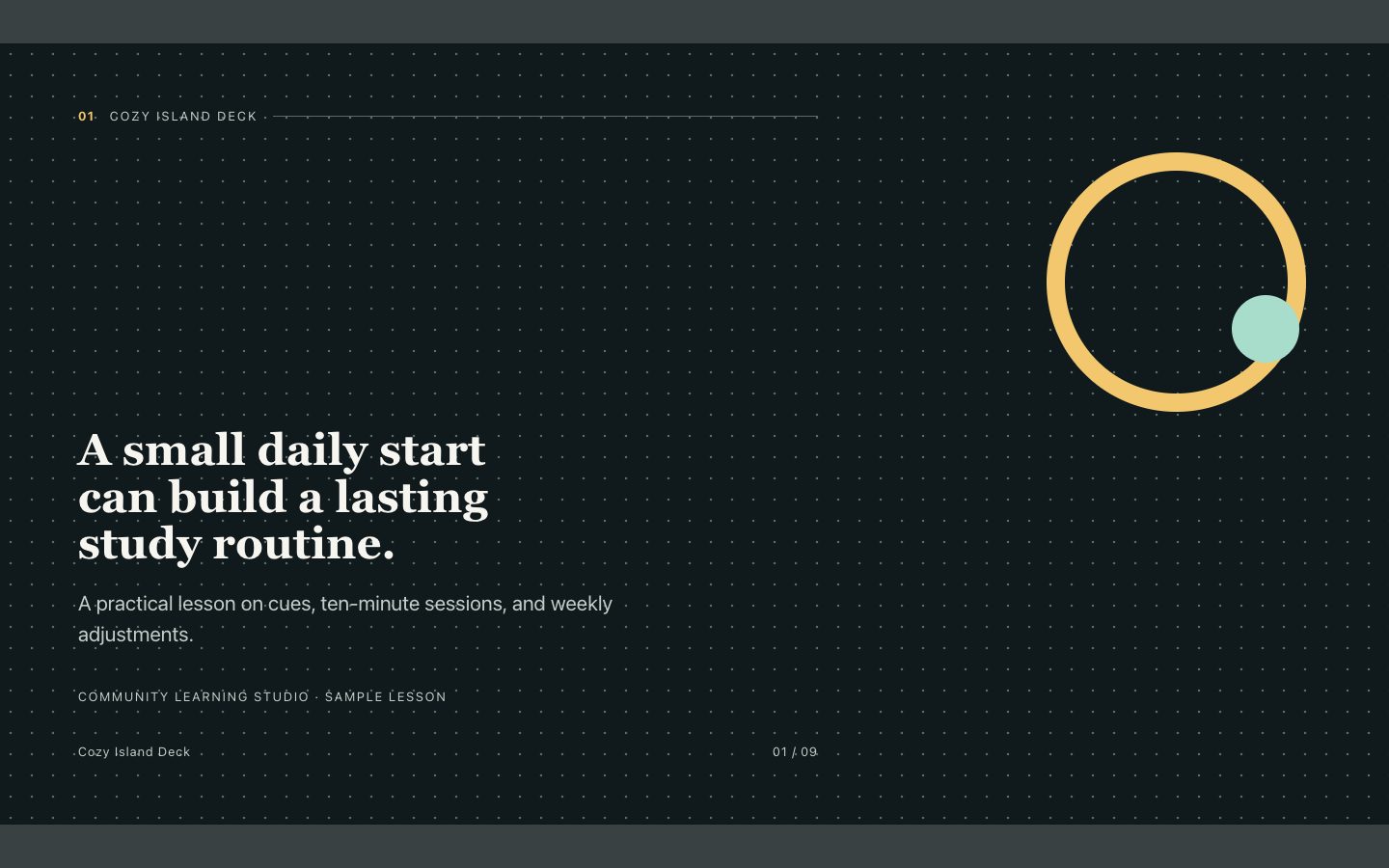 $4.99
$4.99用贯穿全篇的小岛旅程讲清一节课。原创黏土质感角色、点状路径与清晰的教学版式相结合,生成文字准确、可离线播放的 16:9 演示文稿。
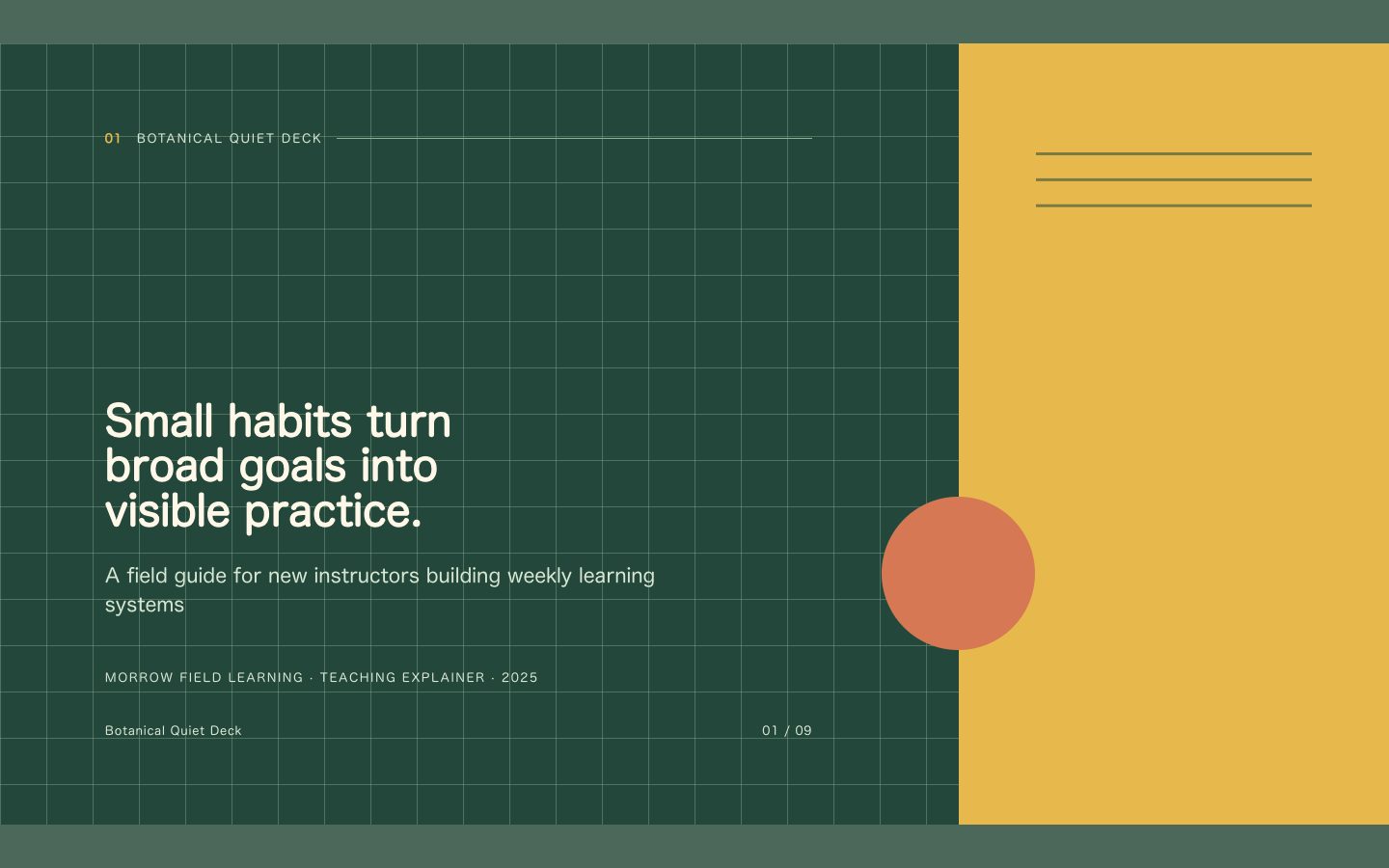 $4.99
$4.99一套用于教学讲解的标志性演示文稿系统,将饱和植物绿背景、扁平水粉插画、圆润字体与编辑网格结合起来。它帮助课程创作者把复杂材料整理成平静、易记且文字准确的学习内容。
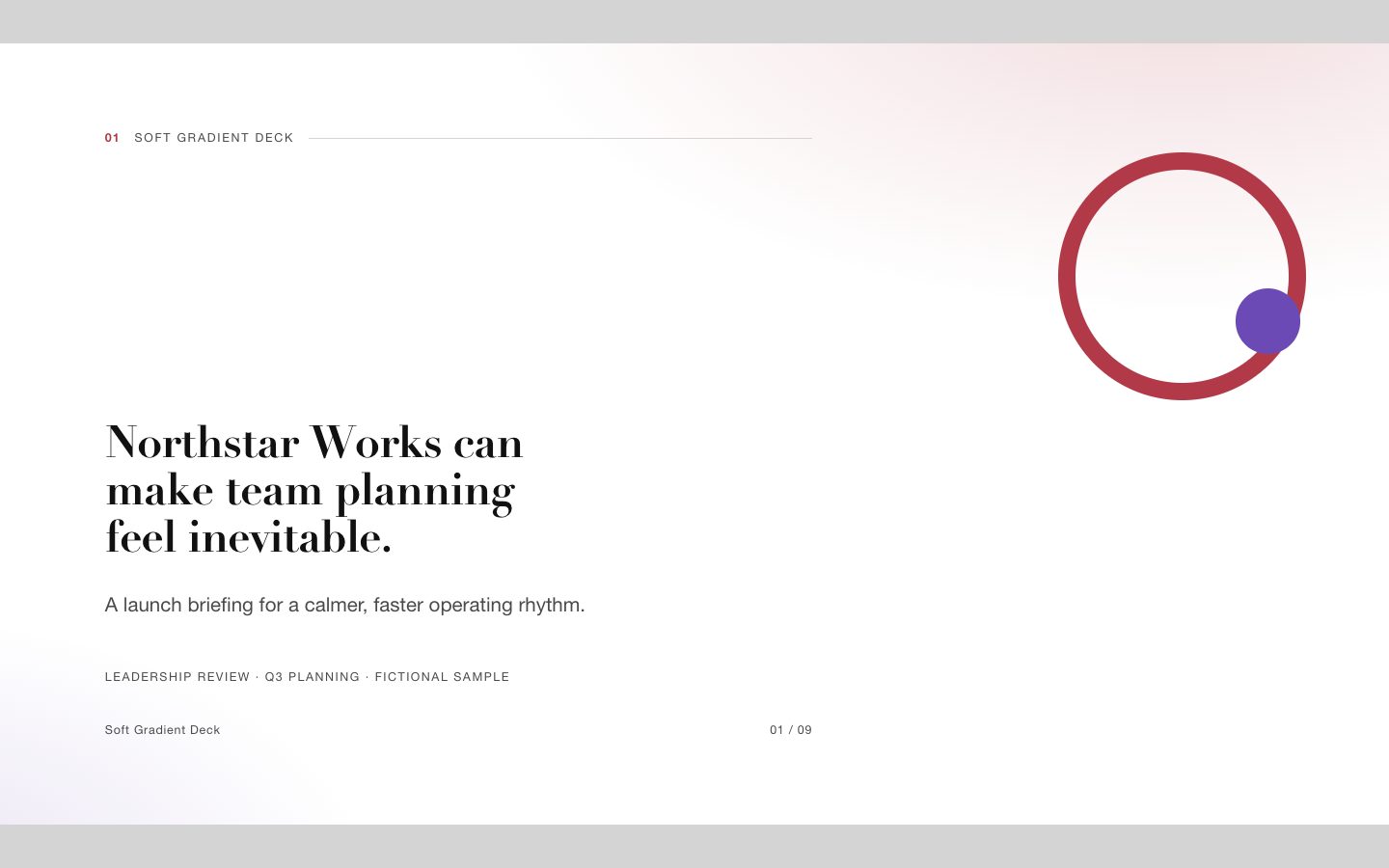 $4.99
$4.99面向创业公司发布会与高管汇报的签名式演示系统,将柔和的珊瑚红至紫罗兰渐变、编辑感衬线标题、清晰的无衬线正文和充足留白结合起来,输出完全可编辑的 HTML 幻灯片。
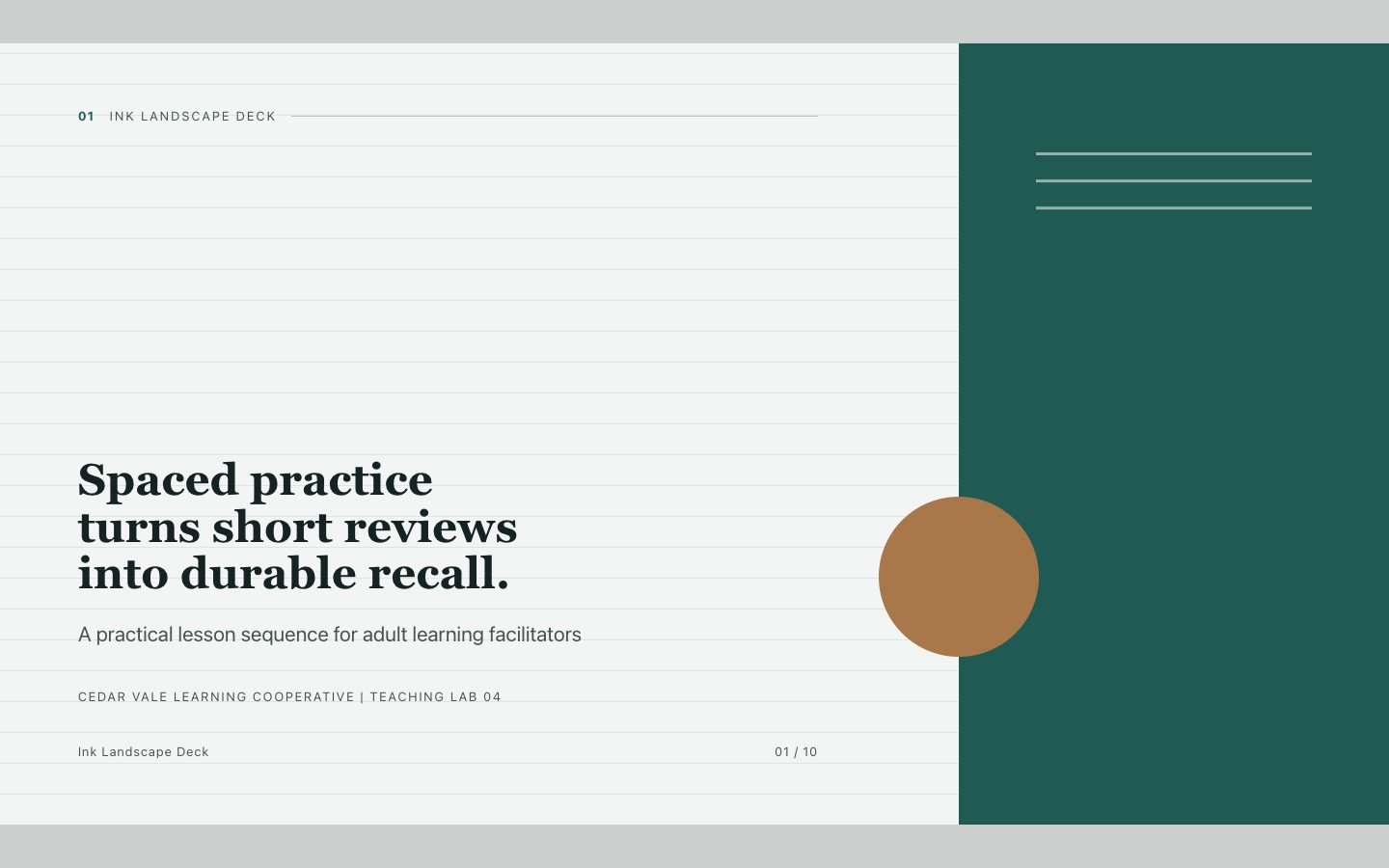 $4.99
$4.99一项面向教学讲解的高级演示文稿技能,强调安静而有力量的视觉气质、准确的文字和鲜明一致的视觉系统。它将结构化资料转化为编辑感强的演示文稿,以宣纸般的底色、层叠墨色山脊、几何图解和有节奏的行动式标题,帮助观众理解复杂概念。